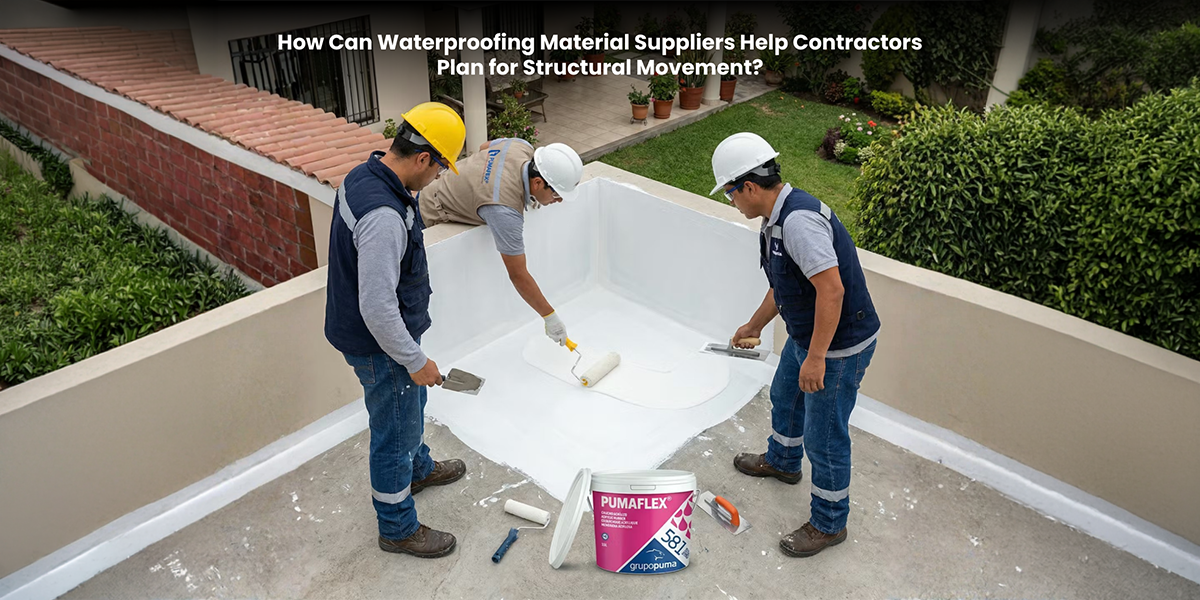
How Can Waterproofing Material Suppliers Help Contractors Plan for Structural Movement?
Waterproofing material suppliers can help contractors plan for structural movement before it affects a building’s waterproofing system. Concrete expands and contracts as temperatures change, while designated joints accommodate movement between structural sections. If these movements are not considered during planning, waterproofing layers may experience excessive stress, potentially leading to cracks, loss of adhesion or water ingress.
A reliable approach begins with identifying movement-prone areas and understanding the requirements of each joint. Contractors must consider joint dimensions, substrate conditions, environmental exposure and the connection between adjoining materials. Discussing these factors before installation helps project teams select appropriate systems and avoid unnecessary changes during construction.
- Why should structural movement be assessed before waterproofing begins?
- How should waterproofing systems accommodate different joint types?
- Which Installation Details Require Careful Coordination with Waterproofing Material Suppliers
- How can suppliers support technical approval and procurement?
- Conclusion
- Frequently Asked Questions
Why should structural movement be assessed before waterproofing begins?
Identify areas that require flexible detailing
Structural movement can affect expansion joints, connections between different materials and locations where the building’s geometry changes. Each area presents different challenges, so contractors should review the structural drawings before finalising the waterproofing specification. This helps identify where flexible connections or dedicated joint-sealing systems may be required.
For projects in the UAE, temperature variations and direct sunlight are important considerations for exposed roofs, terraces and external structures. Contractors should assess these conditions alongside the building design and the expected movement of individual components. This early assessment helps establish appropriate detailing requirements before work begins on site.
Establish the movement requirements
The expected direction and range of movement determine which joint-sealing methods are suitable. Some joints accommodate expansion and contraction, while others allow adjoining structural sections to move relative to one another. A sealing component that cannot accommodate the specified movement may restrict the joint or place excessive stress on the surrounding waterproofing layer.
Before approving a detail, contractors should confirm:
- The joint’s function, width and depth.
- The anticipated direction and range of movement.
- The materials forming the adjoining surfaces.
- Exposure to weather or water pressure.
- The installation and inspection requirements.
These details provide a practical basis for selecting waterproofing materials that meet the project’s technical requirements.
How should waterproofing systems accommodate different joint types?
Expansion joints and flexible sealing systems
Expansion joints allow structural sections to move without placing excessive stress on the connection. Their waterproofing details must accommodate the specified movement while maintaining a continuous barrier against water. Depending on the design, suitable solutions may include flexible joint bands, specially detailed membranes or elastomeric sealants designed for movement joints.
Waterproofing material suppliers can help contractors review the available technical information and identify suitable options for the application. The assessment should cover movement capacity, joint geometry, substrate compatibility and environmental exposure. The selected system must meet the project’s requirements as a complete assembly rather than simply fit the visible opening.
Construction joints and waterstops
Construction joints form where concrete placement stops and resumes, often during separate stages of a project. They are not necessarily designed to accommodate the same degree of movement as expansion joints. Where water penetration must be controlled, the specification may call for an embedded waterstop or another approved joint-sealing arrangement.
The position of an embedded waterstop must be coordinated before concrete placement, as access becomes limited once the concrete has set. Contractors should also establish how the joint connects with the external waterproofing layer, where required. The final detail must follow the structural design and the manufacturer’s installation instructions.
Connections between different building materials
Junctions between concrete, masonry and metal can experience movement because these materials respond differently to temperature changes and loading. A rigid seal may not accommodate relative movement at these interfaces, making flexible detailing necessary where specified by the design.
Waterproofing materials for walls should accommodate movement at connections between walls, columns, floor slabs and adjoining structures. These junctions need careful detailing to prevent the waterproofing layer from becoming stressed or separated as connected building elements move independently.
When evaluating waterproofing products, contractors should consider how each component will perform at moving interfaces. Flexible membranes, sealants and joint accessories should work together without restricting the movement required by the structural design. This helps maintain continuity at vulnerable junctions while allowing the connected elements to move as intended.
Which Installation Details Require Careful Coordination with Waterproofing Material Suppliers
Prepare joints to the specified dimensions
Even a suitable waterproofing system can underperform if the joint is incorrectly prepared. Dust, weak concrete residue, contamination and uneven edges can affect adhesion, while incorrect dimensions may prevent the sealing component from functioning as intended. Contractors should inspect the substrate and verify the joint width and depth against the approved detail before application.
Some systems require a primer, backing material or bond breaker to achieve the intended performance. Each component serves a specific purpose and must be installed according to the approved method. If site conditions differ from the drawings, the discrepancy should be resolved before the waterproofing work proceeds.
Coordinate work between construction trades
Movement-joint waterproofing often involves several trades working at different stages. Concrete teams may install embedded waterstops, waterproofing specialists may apply external membranes, and finishing teams may subsequently cover the completed area. Without proper coordination, critical details can become inaccessible or suffer damage during later work.
Contractors should include the following activities in their construction programme:
- Confirm waterstop positions before concrete placement.
- Inspect joint dimensions and substrate conditions before sealing.
- Complete waterproofing details before adjoining finishes restrict access.
- Protect installed components during subsequent construction.
- Inspect critical details before concealing them.
Waterproofing product manufacturers can provide technical drawings and installation instructions to support this process. Contractors should follow the approved documentation and obtain technical approval before changing the specified arrangement.
How can suppliers support technical approval and procurement?
Review technical documentation before approval
Product documentation helps contractors determine whether a proposed material is suitable for a particular joint or structural interface. Relevant information may cover movement capability, substrate preparation, application conditions and compatibility with adjoining components. These details should be assessed against the project specification before the product is approved.
When comparing waterproofing products suppliers, contractors should review product data sheets, confirm movement capability and check compatibility between system components. These details help establish whether the proposed materials meet project specifications before approval.
Match materials to exposure conditions
The conditions surrounding a joint determine the technical properties required from a waterproofing system. Exposed roof joints may require UV-resistant components, while underground applications may need materials suitable for prolonged contact with moisture or water pressure.
When sourcing waterproofing materials UAE, contractors should review technical data sheets to confirm movement capacity, substrate requirements and suitability for the intended exposure conditions. These details help establish whether a product meets the project’s specifications.
When comparing the waterproofing products UAE, contractors should check whether primers, membranes and joint sealants are chemically compatible and suitable for use together. Reviewing manufacturer guidelines, application limits and performance data helps prevent incompatibility between components and supports the selection of a complete system designed for the expected structural movement.
Align deliveries with the construction schedule
Some waterproofing components must be installed before concrete placement, while others are needed after the substrate has been prepared. Delays in material delivery can disrupt the construction schedule and may lead to the use of unapproved substitutes. A project-specific material schedule helps contractors plan deliveries in advance and ensure that the specified products are available when needed.
When sourcing waterproofing materials suppliers in UAE, contractors should confirm availability, quantities, approval status and delivery dates well in advance. Delivered materials should also be checked against the approved specification. This helps reduce last-minute substitutions and supports a more consistent installation process.
Conclusion
Planning for structural movement requires contractors to understand joint functions, assess expected movement and coordinate suitable waterproofing details with the construction programme. Technical documentation, compatible components and timely material supply all contribute to informed decisions. By addressing these requirements before installation, waterproofing material suppliers can help contractors reduce movement-related risks and maintain the continuity of the building’s waterproofing system.
Snowden World can assist construction professionals in exploring suitable building materials and reviewing product requirements for specific project applications.
Frequently Asked Questions
How can waterproofing material suppliers help contractors plan for structural movement?
They provide technical guidance and product information to help contractors select suitable joint-sealing systems.
Which methods can help waterproof expansion joints?
Flexible joint bands, movement-rated sealants and specialist membranes may be suitable options, depending on the extent of joint movement, water exposure and material compatibility.
Why should movement joints be inspected before waterproofing?
Inspection helps identify incorrect joint dimensions, substrate defects and potential installation issues before waterproofing begins.