Stainless Steel Profiles Manufacturer UAE: How Can Stainless Steel Trims Support Consistent Interior Finishes?
Stainless steel profiles manufacturer UAE solutions can give interior spaces a more controlled appearance at points where tiles, panels and other surfaces meet. A trim can define an exposed edge, frame a corner or separate two different materials without making the junction look unfinished. Its shape, dimensions and finish all contribute to how naturally the detail fits within the surrounding design.
Interior projects often contain several types of junctions within the same space. A wall may require an external corner, while a floor may need a transition between different materials and a recessed feature may require a framed edge. Considering these details during the design stage can help create a more unified interior finish.
- Why Do Stainless Steel Trims Matter in Interior Detailing?
- How Do Different Profile Shapes Change the Finished Appearance?
- How Can Trims Create Cleaner Tile Edges?
- What Should Be Considered When Choosing a Profile Finish?
- How Can Profile Dimensions Influence Interior Consistency?
- How Can Stainless Steel Profiles Suppliers Support Project Planning?
- Stainless Steel Profiles Manufacturer UAE: What Installation Practices Help Preserve the Intended Finish?
- How Can Custom Profiles Support Distinctive Interior Details?
- Conclusion
- Frequently Asked Questions
Why Do Stainless Steel Trims Matter in Interior Detailing?
Giving exposed edges a deliberate finish
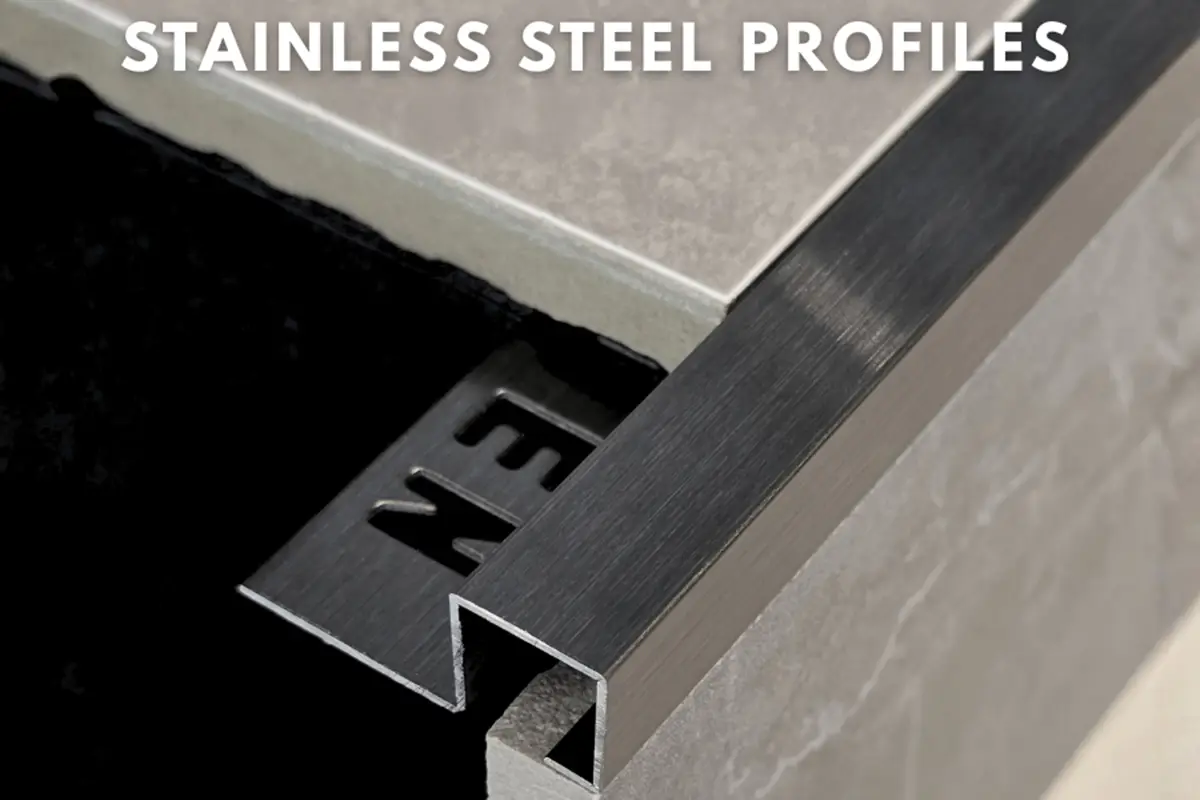
Stainless steel profiles can provide a defined boundary where a tiled or panelled surface ends. Instead of leaving a raw material edge visible, the trim creates a clean termination that becomes part of the finished design. This can be useful around wall edges, columns, niches and other areas where a surface does not continue around a corner.
The visible width of the trim can also influence the character of the finished edge. A narrow detail may blend quietly with the surrounding surface, while a wider profile can create a more noticeable architectural line. The appropriate choice depends on the scale and visual treatment of the area.
Creating a consistent design language
An interior may contain numerous finishing points, and each can affect the overall appearance. Using compatible forms or finishes at related locations can make these details feel connected without requiring every junction to use exactly the same product.
Designers can consider:
- the relationship between trim finishes and nearby metal elements;
- the direction of profile lines within the layout;
- the visible width of exposed sections;
- the position of trims in relation to tile joints.
This approach helps individual details support the wider design rather than appearing as isolated additions.
How Do Different Profile Shapes Change the Finished Appearance?
L-angle profiles for external corners
An L-angle profile can create a defined line where two surfaces meet around an external corner. Its two-sided form allows it to sit across the junction while maintaining a clear edge along the adjoining surfaces.
This option can suit interiors that call for a straightforward geometric detail. Its final appearance depends heavily on accurate positioning because even a small variation along the corner can interrupt an otherwise continuous line.
U-channel profiles for framed details
A stainless steel u profile has a channel-shaped form that can be incorporated into selected recessed or framed applications. It can help define an edge while giving the detail a more structured appearance.
The internal dimensions should correspond with the material being accommodated. Choosing the correct width and depth helps the adjoining material sit neatly within the intended section without making the channel appear disproportionately large.
T-profiles for separating surfaces
A T-profile can introduce a visible dividing line between two adjoining surfaces. It can be useful where different tile layouts, materials or surface directions meet and require a deliberate point of separation.
Rather than attempting to hide the change, the profile makes the junction part of the interior detail. Its central section can create a defined line while allowing the surrounding materials to retain their individual character.
How Can Trims Create Cleaner Tile Edges?
Finishing exposed tile terminations
Tile installations can contain exposed edges around openings, corners and stopping points. A suitable trim can provide a finished termination while helping the edge relate neatly to the adjacent surface.
The profile should correspond with the thickness of the tile and the intended installation position. When correctly sized, the visible edge can sit naturally beside the tile instead of creating an obvious difference in height.
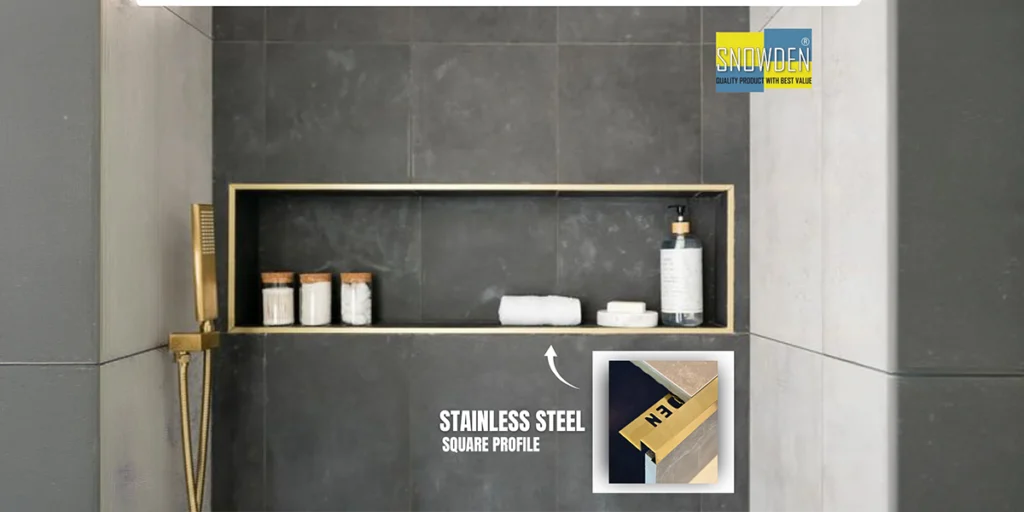
Framing niches and feature areas
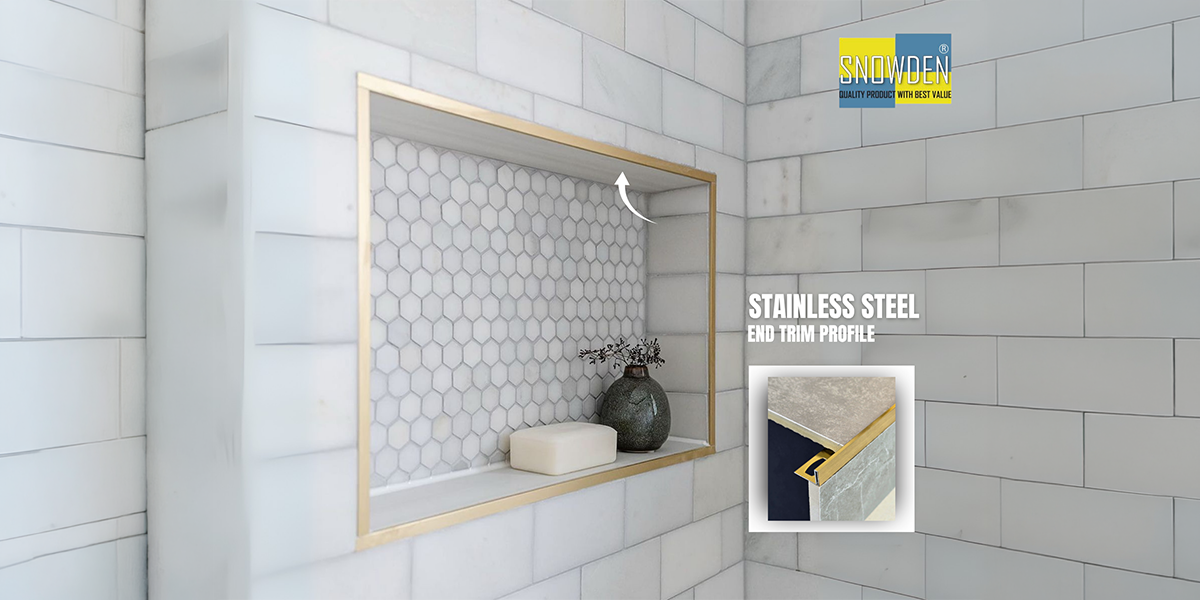
Wall niches and recessed sections often contain several small junctions within a limited space. A trim can frame these edges and give the feature a clearer outline.
A similar detail can be repeated around selected feature areas when the design calls for visual continuity. This can connect separate sections of an interior without adding unnecessary decorative elements.
Defining transitions between materials
When two materials meet, the junction can sometimes appear abrupt if there is no clear boundary. A trim can introduce a controlled separation between them while giving the transition a deliberate appearance.
The position of this detail should relate to the surrounding layout. Aligning it with existing tile joints or architectural lines can make the transition appear integrated rather than independently placed.
What Should Be Considered When Choosing a Profile Finish?
Relating the finish to surrounding materials
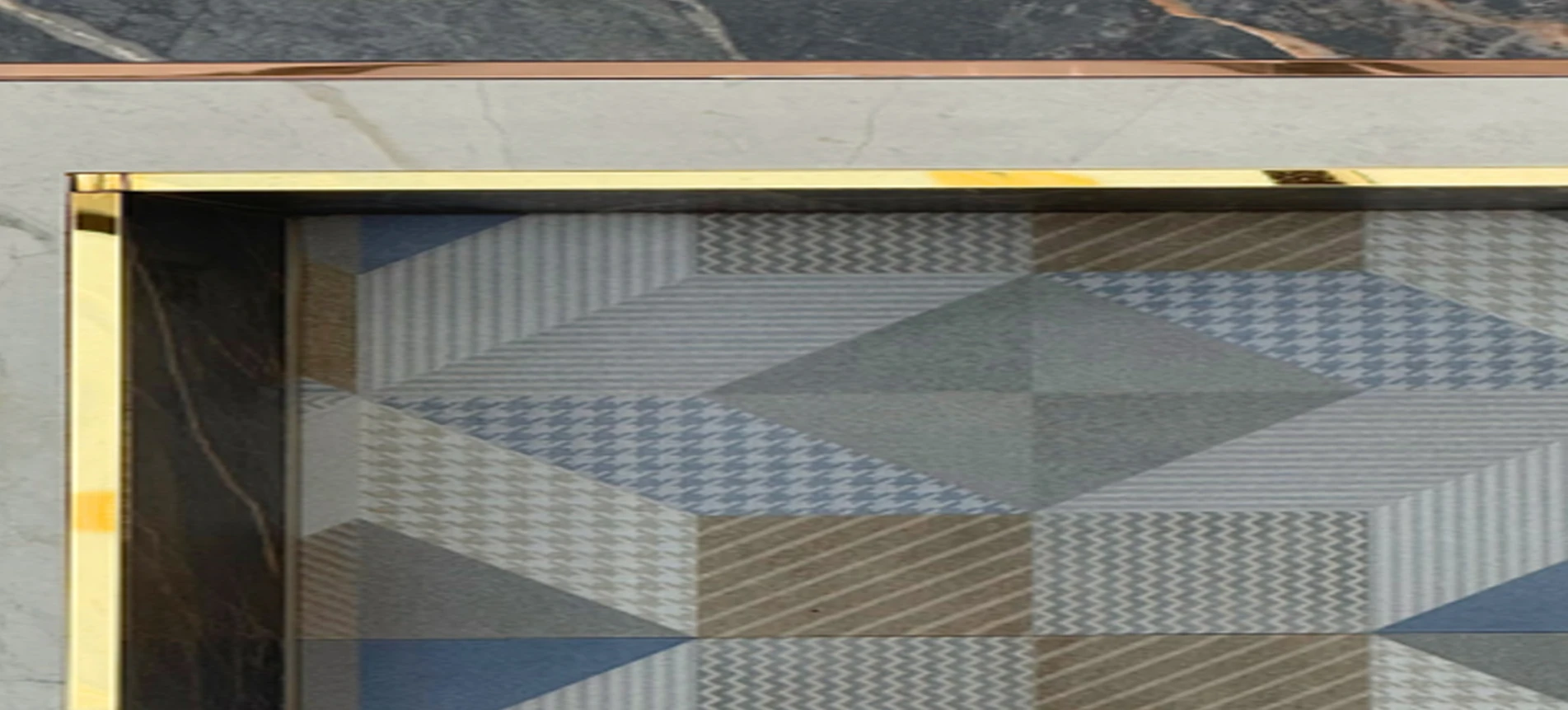
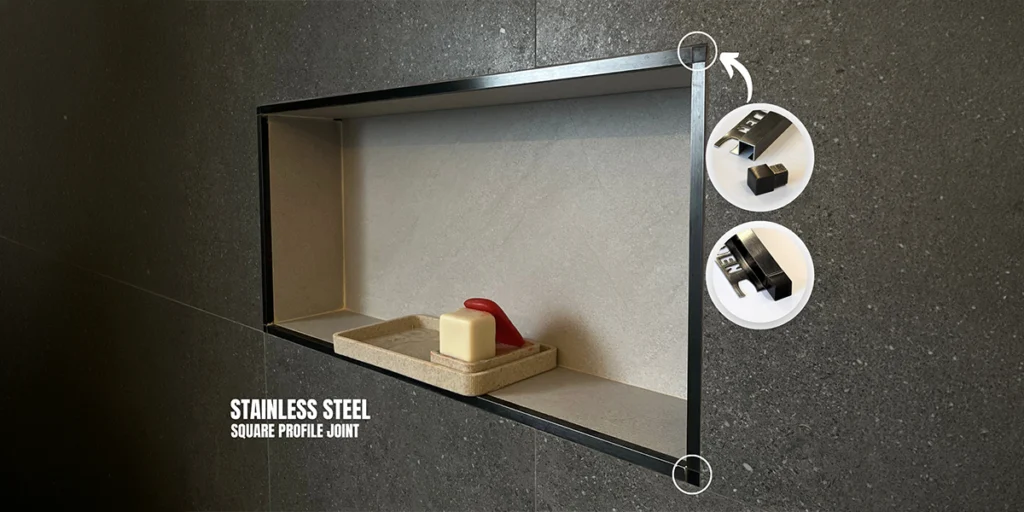
The surface treatment of a trim can influence how it interacts with tiles, stone, glass, cabinetry and other interior elements. A highly reflective finish can create a stronger visual accent, while a more subdued surface may blend into the surrounding materials.
A stainless steel manufacturer can provide different finishing options according to the intended application. The selection should be considered as part of the material palette rather than as a separate technical decision.
Considering the effect of lighting
Lighting can change the way metallic surfaces appear throughout a room. A reflective trim may catch directional light and become more prominent, whereas a less reflective finish can create a quieter edge.
This makes the lighting plan relevant when choosing the final appearance. Profiles positioned beside strong spotlights or illuminated features may need a different visual treatment from those installed in softly lit areas.
How Can Profile Dimensions Influence Interior Consistency?
Matching the material thickness
A profile needs to correspond with the finished thickness of the material it borders. If the trim is too shallow, the surrounding material may sit noticeably above it; if it is too deep, the profile may become more prominent than intended.
Measurements should therefore be confirmed before the product is selected. Tile thickness, substrate depth and the desired visible edge all need to be considered together.
Maintaining suitable proportions
Consistency does not always mean using the same profile size throughout an interior. Different applications may require different dimensions according to the scale of the surrounding surface.
A larger architectural feature may accommodate a more visible trim, while a narrow wall edge may benefit from a finer detail. Maintaining suitable proportions helps each profile feel appropriate to its location.
How Can Stainless Steel Profiles Suppliers Support Project Planning?
Matching products to specific applications
Different areas can require different profile forms. An external corner, exposed edge, transition point and curved section should not automatically be treated with the same solution.
Working with stainless steel profiles suppliers UAE can help project teams review available shapes, dimensions and finishes according to the intended application. This allows product selection to be based on the actual detail rather than on appearance alone.
Planning quantities and lengths
Repeated interior details require careful quantity planning, particularly when profiles are installed across several rooms or long wall sections. The required lengths should account for corners, joints and points where separate sections meet.
Planning these requirements before installation can help reduce unnecessary joins in highly visible areas. It can also make procurement more straightforward when several related profile types are needed for the same project.
Stainless Steel Profiles Manufacturer UAE: What Installation Practices Help Preserve the Intended Finish?
Establishing the profile position first
The trim should form part of the initial setting-out process rather than being added after the surrounding materials have been completed. Establishing its intended position beforehand gives the installer a clear reference for the adjoining surfaces.
For profiles supplied by a stainless steel profiles manufacturer this is particularly relevant where several surfaces meet at defined points. Early coordination can help the profile sit naturally within the planned layout.
Coordinating profile joints
Where more than one length is required, the position of each joint can affect the appearance of the completed installation. Random joins may become noticeable along long or highly visible sections.
Joints can instead be coordinated with corners, tile joints or other natural breaks within the design. This makes individual sections less visually prominent and creates a more considered finish.
How Can Custom Profiles Support Distinctive Interior Details?
Adapting profiles to specific dimensions
Some interiors include unusual dimensions, curved features or architectural details that cannot be addressed conveniently with a standard profile. In such cases, the profile may need to correspond more closely with the dimensions of the feature.
A stainless steel profiles manufacturer in UAE can accommodate project-specific requirements where suitable options are available. This can be particularly relevant when the trim forms part of a distinctive architectural detail rather than a conventional finishing edge.
Keeping customised details visually connected
Customisation should still follow the design language established elsewhere in the interior. The profile should relate to surrounding elements through its proportion, finish and placement.
This allows a project-specific detail to appear intentional rather than separate from the rest of the scheme. Clear coordination between design drawings, dimensions and installation requirements can support a cleaner final result.
Conclusion
Interior consistency is often shaped by the way smaller junctions are resolved. Stainless steel profiles manufacturer UAE solutions can define exposed edges, frame recessed areas and separate adjoining materials while supporting a coordinated material scheme. The profile shape, dimensions, finish and location each influence how naturally the detail sits within the completed space.
The most effective approach is to consider trims during the design and setting-out stages rather than treating them as accessories selected at the end. L-angle, U-channel and T-profile options can address different junctions, while suitable finishes and dimensions can help maintain the intended visual relationship between materials. Careful specification can turn these practical details into a consistent part of the interior design.
For stainless steel profile solutions designed to meet different interior finishing requirements, Snowden World offers stainless steel profile options for considered project applications.
Frequently Asked Questions
What should buyers consider when selecting a stainless steel profile?
The application, material thickness, profile shape, visible edge and required finish should be assessed before making a selection. Considering these factors together can help buyers choose a profile that suits both the installation requirements and the intended interior appearance.
Can different profile shapes be used within the same interior?
Yes. Different shapes can serve different junctions within one project. For example, one profile may define an external corner while another can separate adjoining surfaces or frame a recessed feature.
How can trims contribute to a consistent interior design?
Trims can create repeated visual details around selected edges, transitions and architectural features. Coordinating their proportions and finishes with surrounding materials can help separate areas while maintaining a connected overall appearance.